
July 9, 2025
The benefits of exporting Infor M3 data to a data warehouse
Precog
Exporting Infor M3 data to a data warehouse offers numerous significant benefits, transforming how enterprise manufacturers and distributors can leverage their ERP data for deeper insights and improved decision-making. Here are the key advantages:
Enhanced Reporting and Analytics
- Unified View of Data: Infor M3 is a powerful ERP, but often businesses use other systems (CRM, marketing, external sales platforms, etc.). A data warehouse acts as a central repository, bringing together data from Infor M3 and all other disparate sources. This unified view enables comprehensive reporting and analysis across the entire organization, eliminating data silos.
- Historical Data Analysis: ERP systems are often designed for operational efficiency, not always for long-term historical analysis. A data warehouse is optimized for storing vast amounts of historical data, allowing for trend analysis, forecasting, and understanding long-term performance patterns that would be difficult or impossible within Infor M3 directly.
- Improved Performance for Reporting: Running complex queries and reports directly on a live Infor M3 system can impact its performance, slowing down daily operations. By offloading reporting to a data warehouse, the operational ERP remains fast and responsive.
- Self-Service BI: Data warehouses, especially when combined with modern business intelligence (BI) tools (like Infor's Birst platform), empower business users to create their own reports and dashboards without relying heavily on IT. This self-service capability fosters data-driven decision-making throughout the organization.
- Pre-built Analytics and KPIs: Many data warehousing solutions, especially those designed for Infor M3, come with pre-built content, including industry-specific KPIs, reports, and dashboards for areas like sales, finance, procurement, and production.
Deeper Business Insights and Decision-Making
- Actionable Intelligence: By combining Infor M3 data with other sources, businesses can gain a more holistic understanding of their operations, identifying relationships and patterns that might not be visible in isolated systems. This leads to more accurate and actionable insights.
- Predictive Analytics: With a rich, integrated dataset in a data warehouse, businesses can leverage advanced analytics and machine learning techniques to develop predictive models. This could include predicting future sales, identifying potential supply chain issues, or optimizing inventory levels.
- Better Data Quality and Governance: Data warehousing initiatives often involve data cleansing and transformation processes, leading to improved data quality. A data warehouse also facilitates better data governance, ensuring consistency, accuracy, and compliance with regulations.
Flexibility and Scalability
- Scalable Storage: Data warehouses are designed to handle massive volumes of data, allowing businesses to grow their data footprint without performance degradation.
- Agility for New Analysis: With a well-structured data warehouse, it's easier to adapt to new analytical requirements or integrate new data sources as business needs evolve.
- Reduced Burden on ERP: By extracting data from Infor M3, the data warehouse reduces the load on the ERP system, ensuring its optimal performance for transactional operations. This can also lead to reduced costs for Infor M3 database storage by moving less frequently accessed data to a lower-cost data lake within the data warehousing solution.
Operational Efficiency and Cost Savings
- Automated Data Movement: Tools like Infor's Data Mover can automate the transfer of transactional and master data from Infor M3 to the data warehouse, streamlining data acquisition and reducing manual effort.
- Offloading Archived Data: Infor M3 allows archiving data to the Infor Data Lake, which is a component of a broader data warehousing strategy. This offloads older data from the active Infor M3 database, reducing storage costs and improving Infor M3's performance.
In essence, exporting Infor M3 data to a data warehouse transforms raw operational data into a strategic asset, empowering businesses to make more informed decisions, optimize processes, and gain a competitive edge.
Infor M3 provides industry-leading functionality for the chemical, distribution, equipment, fashion, food and beverage, and industrial manufacturing industries.
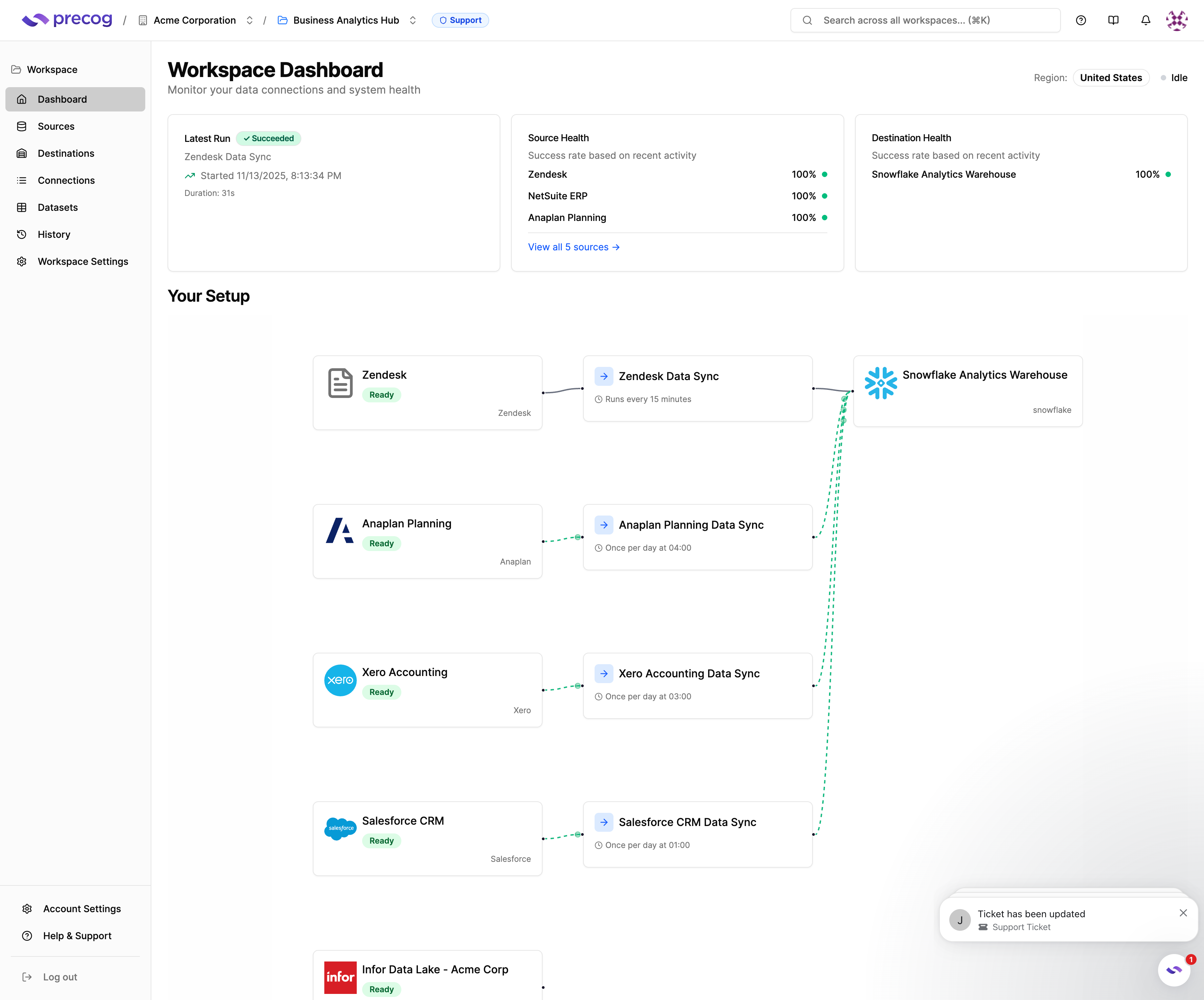
Moving data from Infor M3 is made possible by Precog’s ELT platform. It supports transferring data from Infor M3 to many destinations.


.svg)


